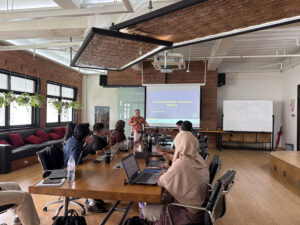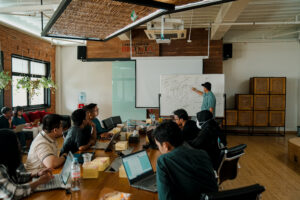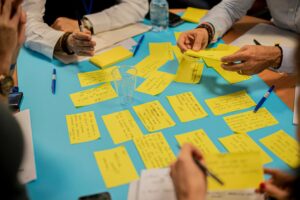
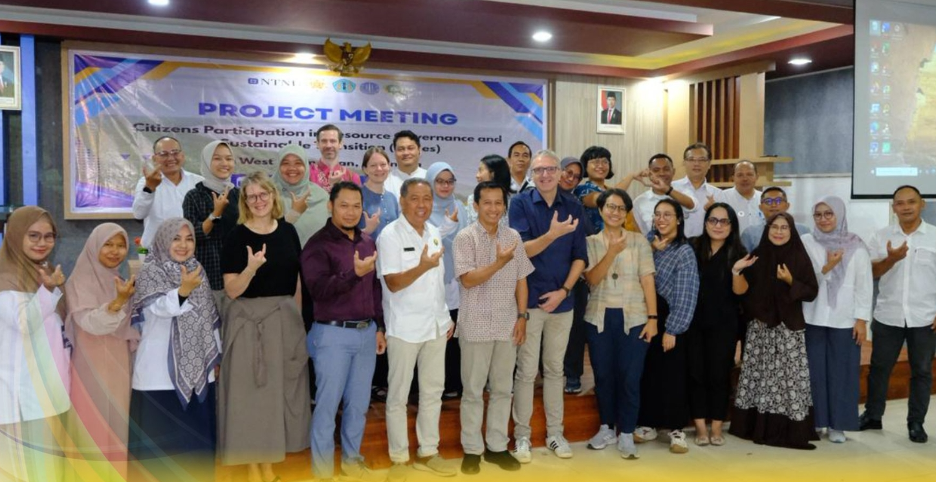
The Citizens Participation in Resource Governance and Sustainable Transition (SUSTAIN) Project held its annual Project Meeting at the Accounting Hall of Politeknik Negeri Pontianak (POLNEP) from 2–7 November 2025. The meeting brought together representatives from partner institutions, including the Norwegian University of Science and Technology (NTNU), Universitas Gadjah Mada (UGM), Universitas Bangka Belitung (UBB), Universitas Nusa Cendana (UNDANA), and POLNEP as the host institution. The event served as a collaborative platform for partners to share project updates, discuss challenges encountered during implementation, and formulate strategic steps to support the long-term sustainability of the project. This year’s meeting focused on reviewing the progress of various initiatives in both research and educational development. In addition to reflecting on achievements, participants explored opportunities to strengthen collaboration and discussed plans for future activities.
The SUSTAIN-NORHED Project Meeting also provided an important opportunity to expand networks and foster collaboration among universities, government institutions, private sector actors, and civil society organizations. Throughout the project, a wide range of dissemination activities has successfully engaged diverse stakeholders and encouraged broader dialogue on resource governance, citizen participation, and pathways toward sustainable development.
Organized on a rotating basis among partner universities each year, the Project Meeting has contributed to the development of a stronger North–South academic community. This collaborative network goes beyond project implementation, serving as a space for exchanging ideas, knowledge, and values related to citizen engagement in resource governance and sustainable energy transitions, while remaining grounded in the local contexts of each partner institution. Through this meeting, project partners reaffirmed their shared commitment to strengthening international cooperation, advancing institutional capacity development, and generating knowledge that contributes to more inclusive and sustainable resource governance.