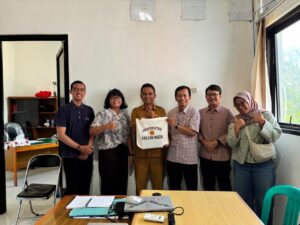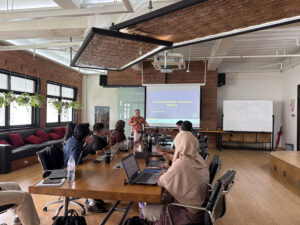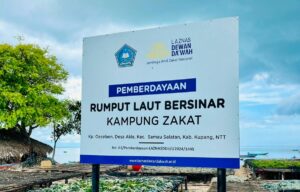
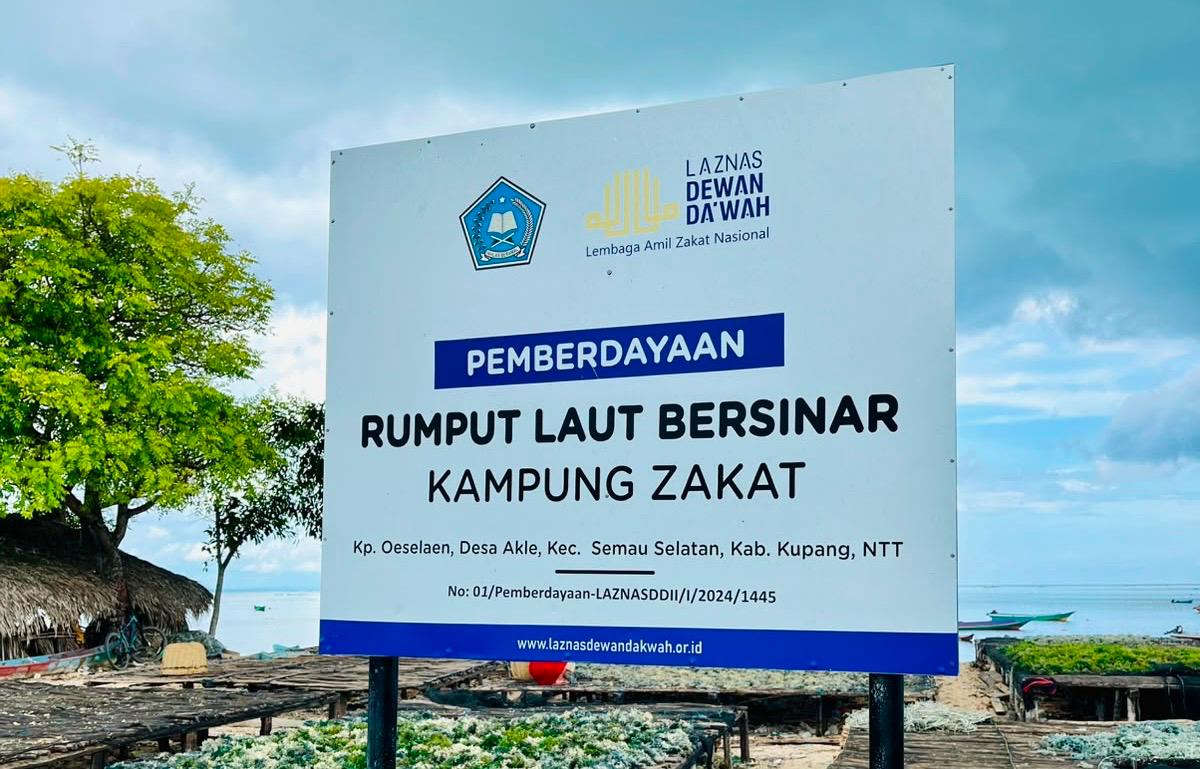
A research team from Universitas Gadjah Mada (UGM) conducted field research in East Nusa Tenggara, particularly in Kupang City and Semau Island, Kupang Regency. The research was carried out in collaboration with SUSTAIN partner Universitas Nusa Cendana (UNDANA) to explore the dynamics of coastal resource governance, with a particular focus on salt and seaweed commodities.
The research forms part of SUSTAIN’s efforts to strengthen stakeholder engagement and citizen participation in natural resource governance. Through interviews, discussions, and field visits, the research team engaged with a range of stakeholders, including government representatives, coastal communities, businesses, and civil society organisations such as Wahana Lingkungan Hidup Indonesia (WALHI) and Bengkel APPeK. Engaging with these diverse actors enabled the team to examine coastal resource governance from multiple perspectives while gaining a deeper understanding of the challenges faced by local communities in developing their economic potential.
Preliminary findings indicate that salt and seaweed production in East Nusa Tenggara has significant economic potential, while still facing a number of challenges across production and governance systems. In the seaweed sector, for example, communities continue to face challenges related to market access, dependence on intermediaries, limited extension and support services, and relatively basic production-recording systems. These conditions highlight that developing coastal resources is not solely about increasing production, but also about ensuring that communities can participate meaningfully and capture greater benefits along the value chain.
Similar challenges can be observed in the production of smallholder salt. Salt production is largely carried out independently by coastal households using relatively simple technologies, with products distributed through local trading networks. Despite its market potential, limited processing technology, market access, and supporting governance mechanisms mean that the added value generated from the commodity has yet to be fully captured by local communities. Communities’ experiences in dealing with disruptions caused by natural disasters, including the impacts of Cyclone Seroja, also highlight the importance of strengthening community resilience as part of sustainable coastal resource governance.
The SUSTAIN research seeks to create spaces for dialogue between academic knowledge and the lived experiences of stakeholders on the ground. The exchange of perspectives among researchers, government representatives, communities, and civil society organisations is an important part of understanding how natural resource governance can be developed in a more inclusive and sustainable manner. The collaborative research in East Nusa Tenggara further strengthens SUSTAIN’s approach, which places citizen participation at the heart of the transition towards sustainable resource governance. Insights from the field are expected to contribute to a better understanding of the needs, challenges, and opportunities faced by coastal communities, while informing the development of more context-specific recommendations for natural resource governance in East Nusa Tenggara.