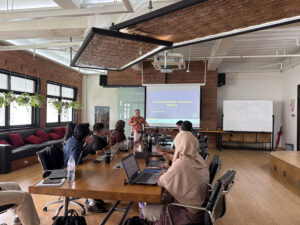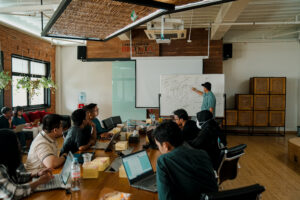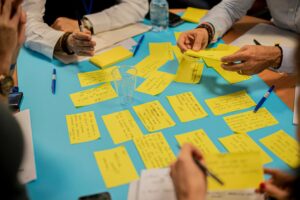
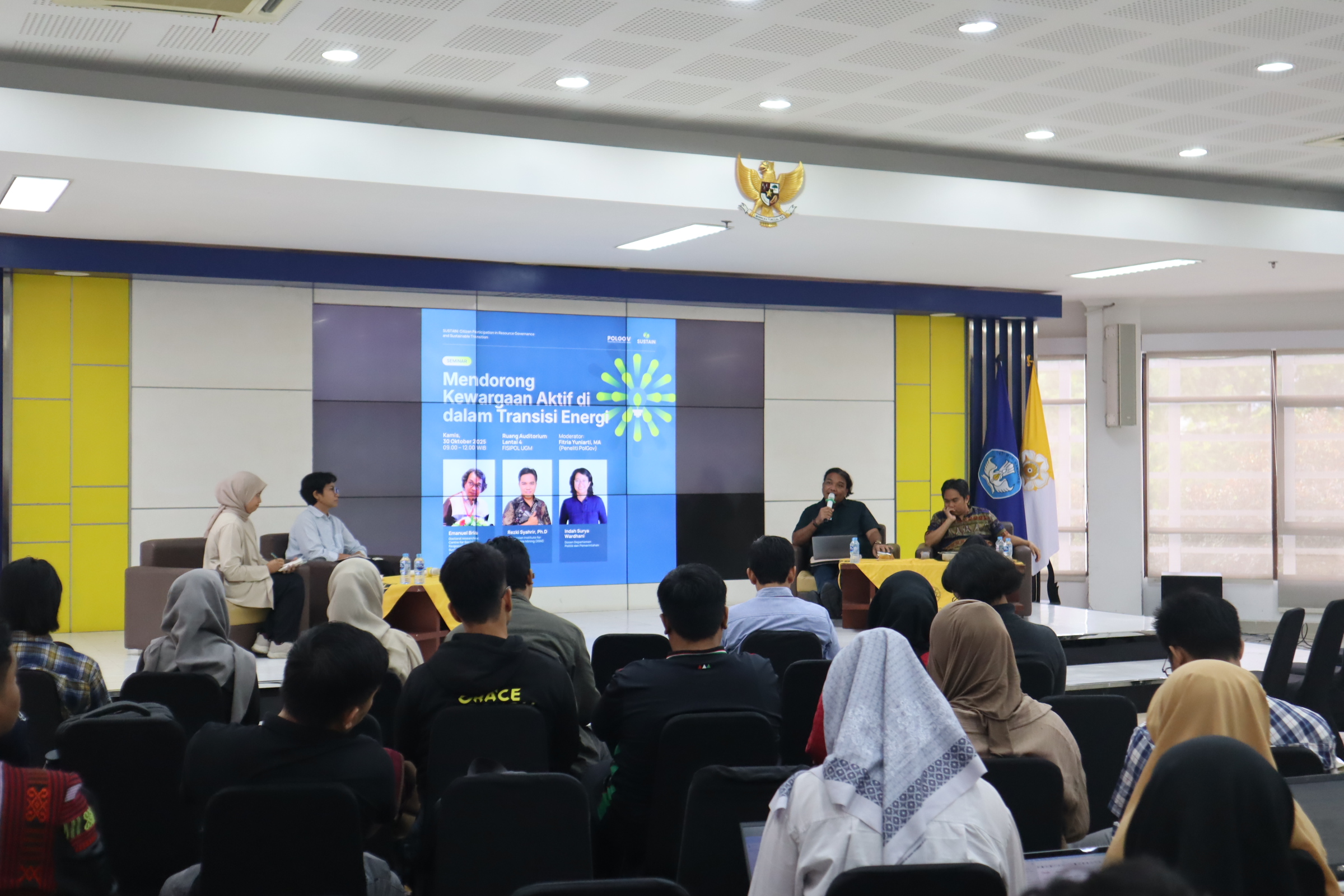
On 30 October 2025, the Citizens Participation in Resource Governance and Sustainable Transition (SUSTAIN) Project organized a seminar entitled “Promoting Active Citizenship in Energy Transition.” The event was part of the Citizen Engagement, Transparency, and Transnational Natural Resources (CitRes) Program.
The seminar aimed to create a space for dialogue and discussion that encourages public involvement in policy-making processes, which is increasingly important in responding to the demands of energy transition and ensuring energy security. Creating participatory spaces, fostering autonomy, and expanding access to knowledge are essential for enabling meaningful citizen engagement. The principle of equity serves as a fundamental foundation for ensuring that decisions related to energy governance are made in ways that are fair, inclusive, and responsive to the needs of communities.
The seminar was held at the 4th Floor Auditorium of the Faculty of Social and Political Sciences (FISIPOL), Universitas Gadjah Mada (UGM), and brought together participants from diverse backgrounds, including academics, civil society organizations, students, and practitioners working on energy transition issues. The event featured three speakers, Emanuel Bria, Rezki Syahrir, and Indah Surya Wardhani.
Although each speaker addressed different topics, their presentations were connected through a common theme of strengthening participation and collaboration among citizens, institutions, and stakeholders in advancing a just and sustainable energy transition. The first session explored the question, ‘What is the role of civil society in promoting transparency and public participation in just energy transition policies?’ The second session discussed ‘How can access to technology serve as both an opportunity and a challenge for citizen engagement in energy transition?’ The final session examined “How can locally driven initiatives encourage greater citizen participation in energy transition processes?’ Through this seminar, the SUSTAIN Project reaffirmed its commitment to fostering participatory spaces that enable citizens to play an active role in shaping energy transition processes. By strengthening multi-stakeholder dialogue and expanding access to knowledge, SUSTAIN seeks to support more democratic, inclusive, and responsive approaches to resource governance while contributing to a just energy transition at the local, national, and global levels.